Why buyers choose acacia wood furniture
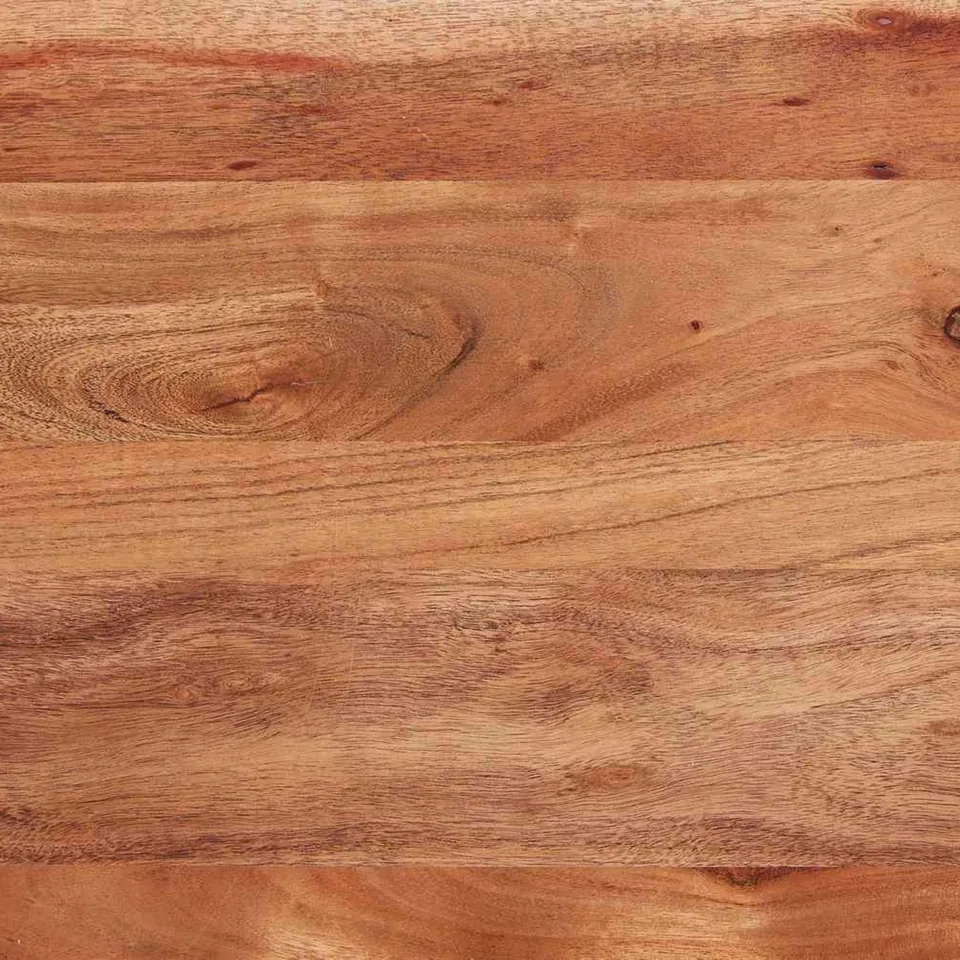
The acacia used in Indian furniture is a dense, hard timber with a pronounced grain and natural contrast between lighter and darker tones. It is heavier than mango wood and resists everyday wear well, which is why it is a common choice for dining tables, table tops, benches and storage pieces that see daily use.
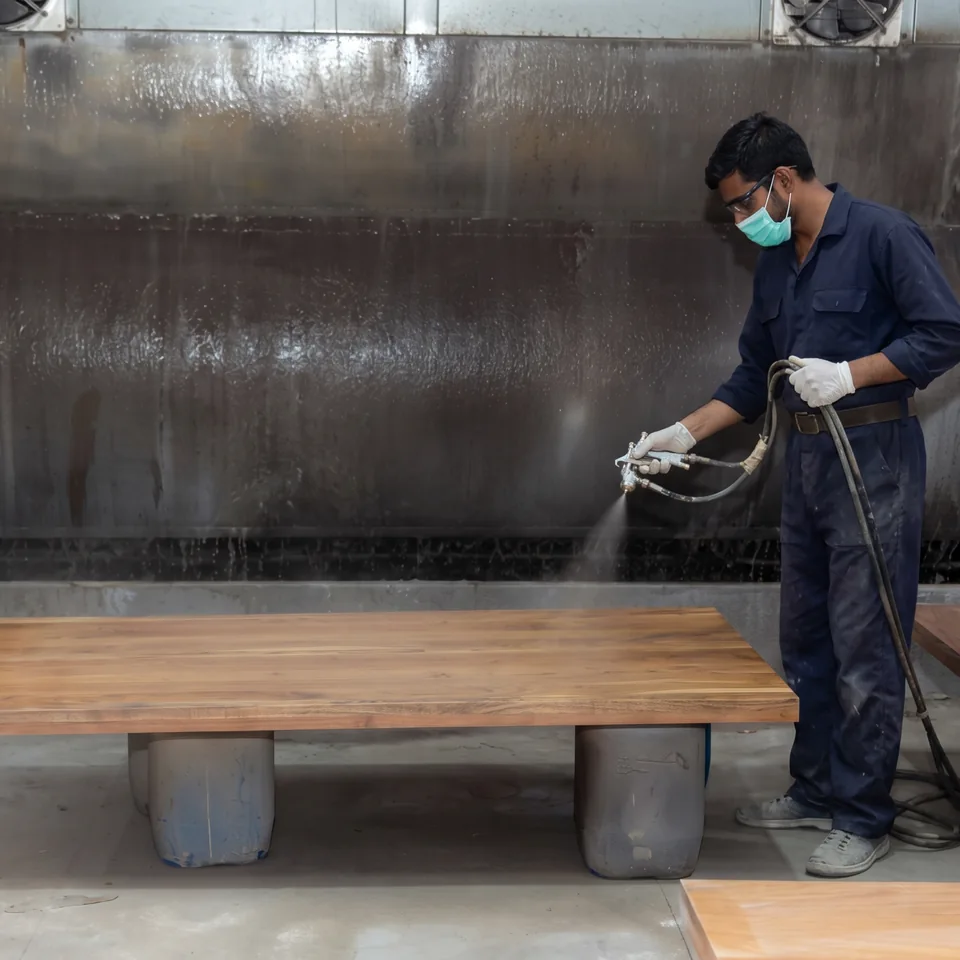
Acacia has natural oils that give finished surfaces depth and warmth. It suits oiled, matt and satin finishes, and it carries darker rustic tones particularly well.
What we manufacture in acacia wood
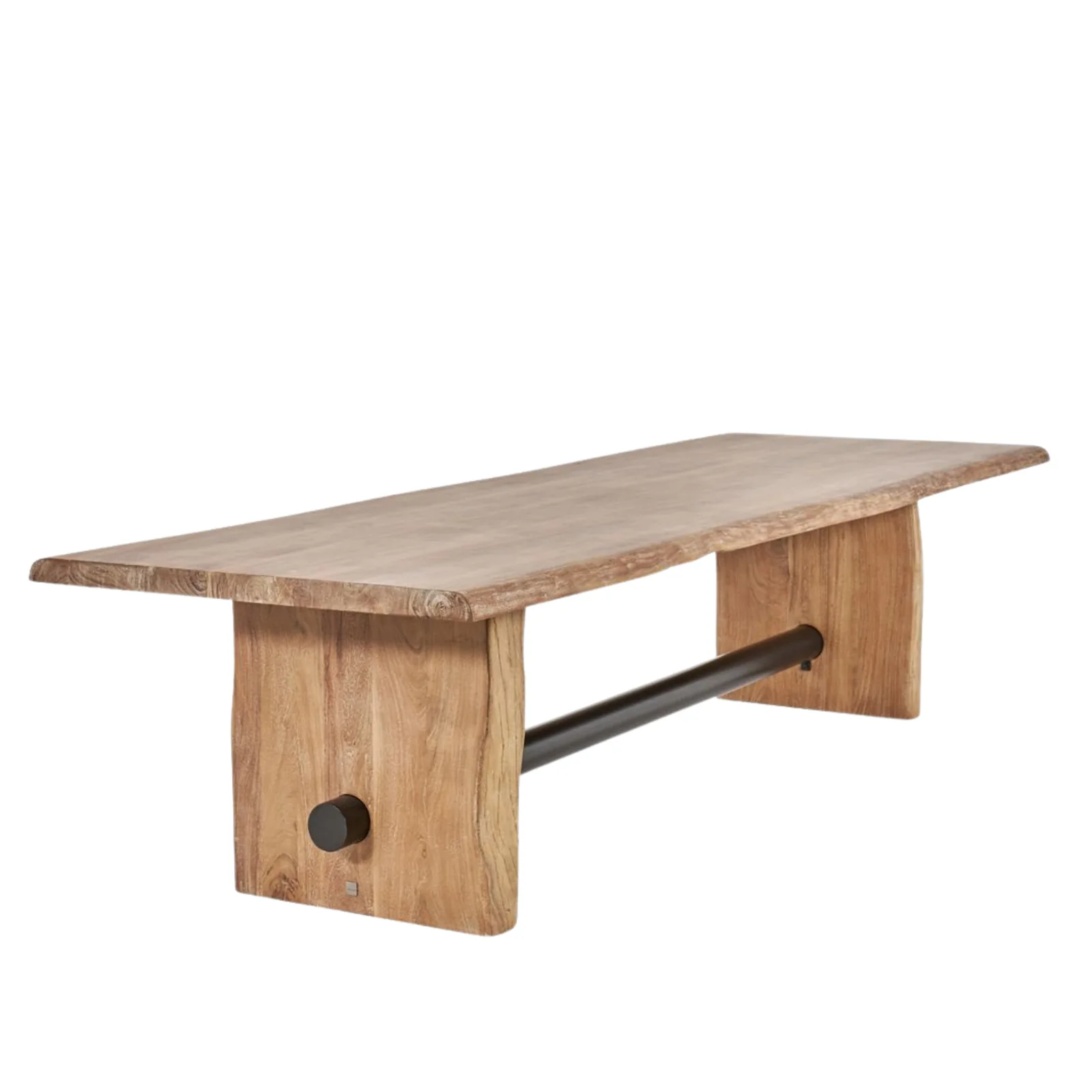
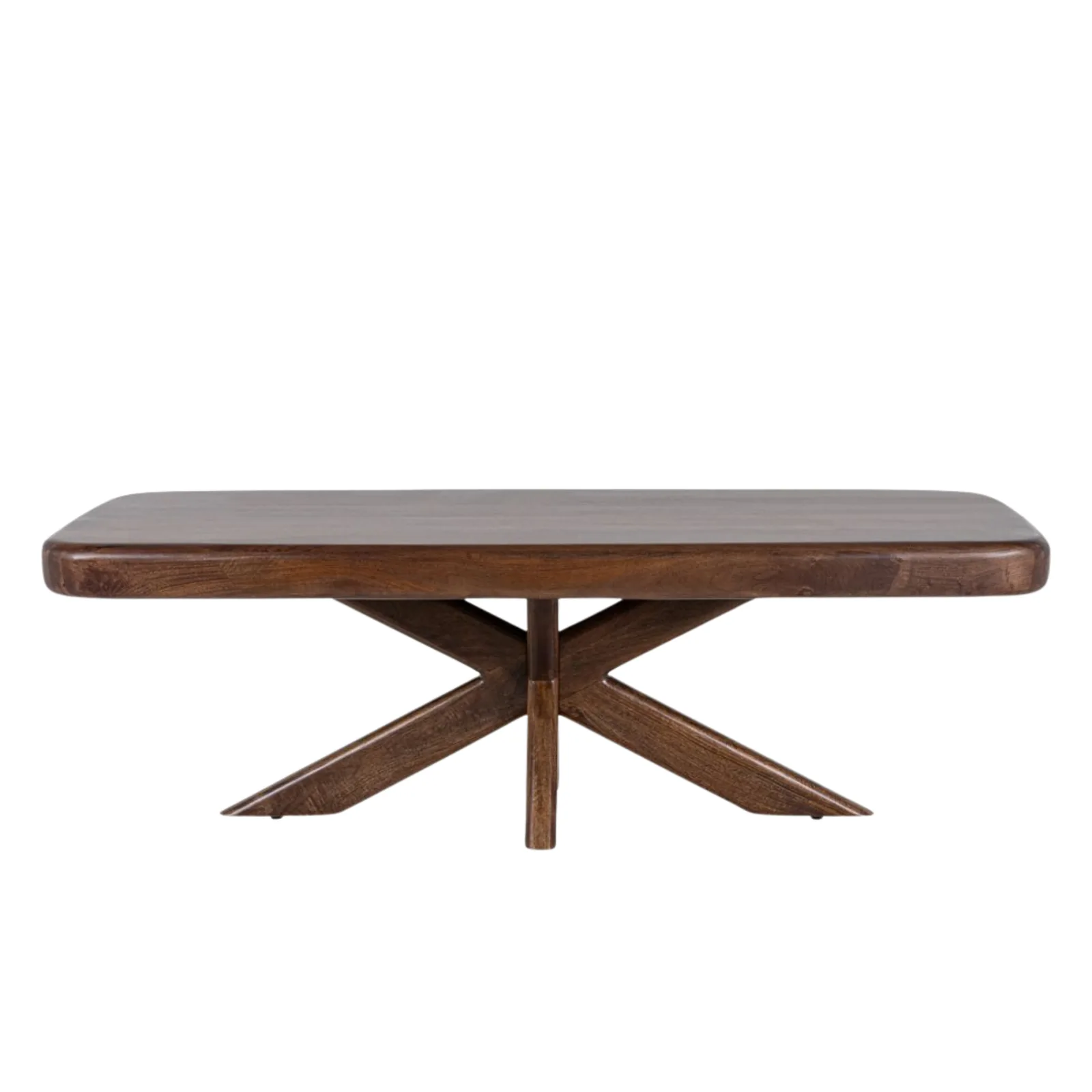
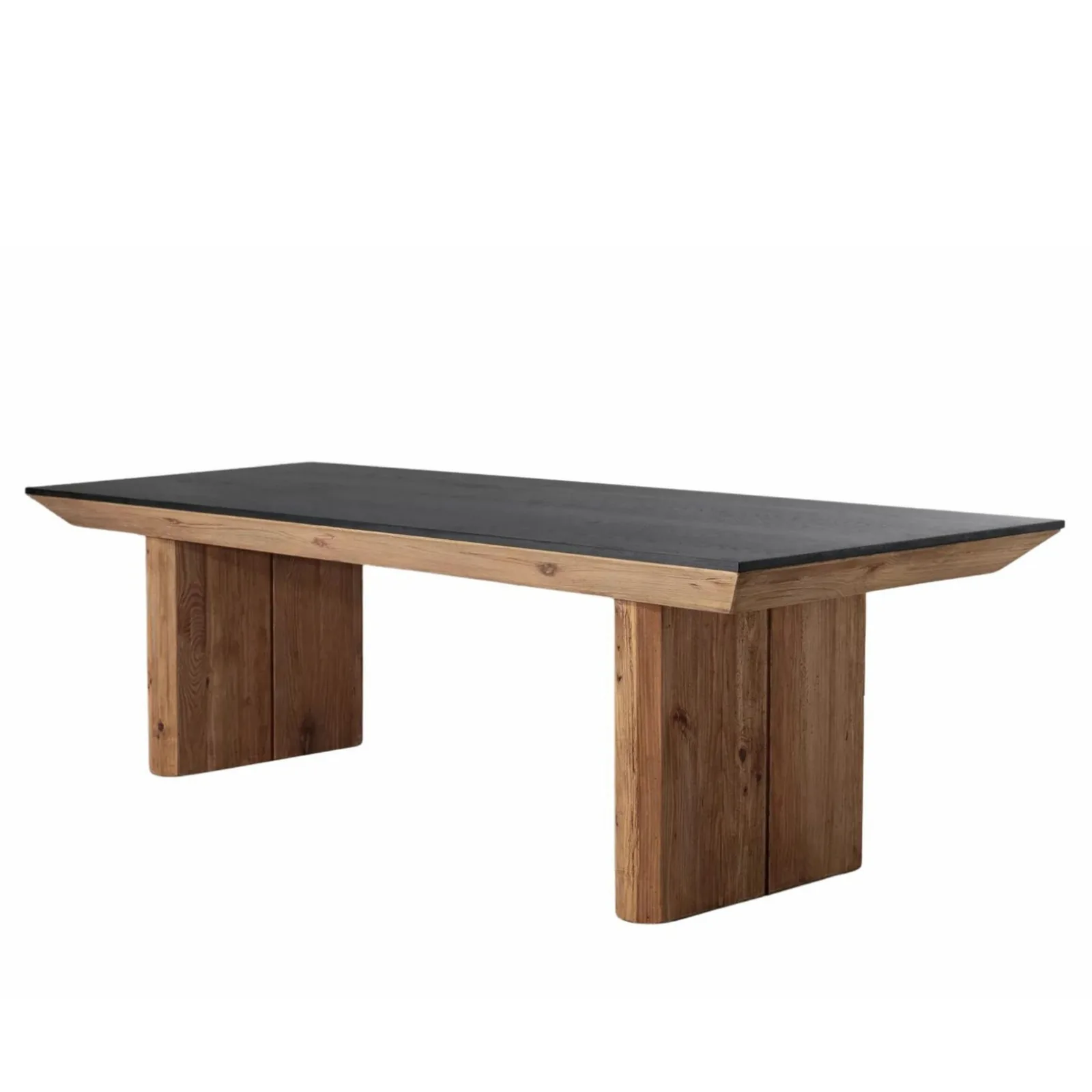
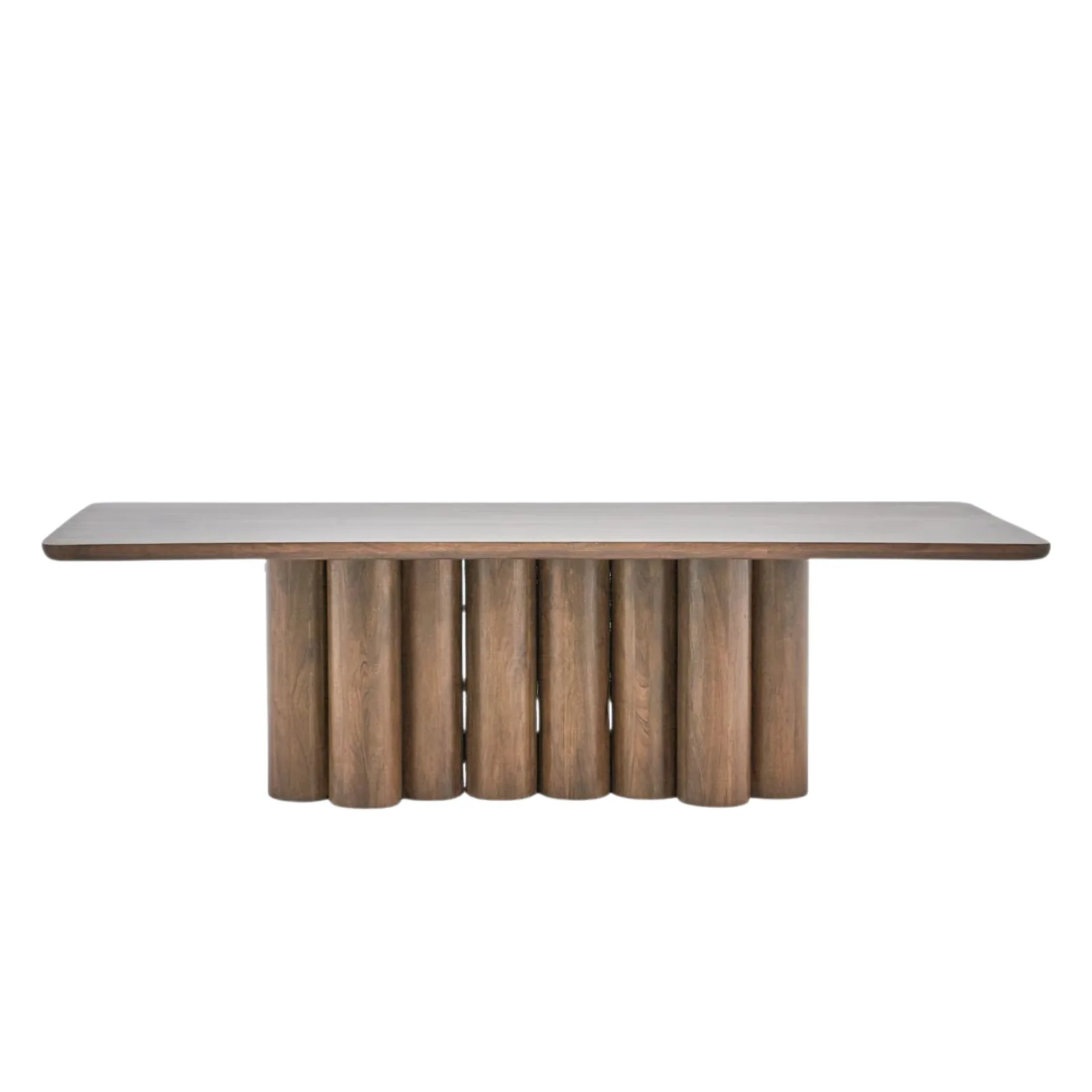
- Dining tables with sculptural, trestle and crossed bases.
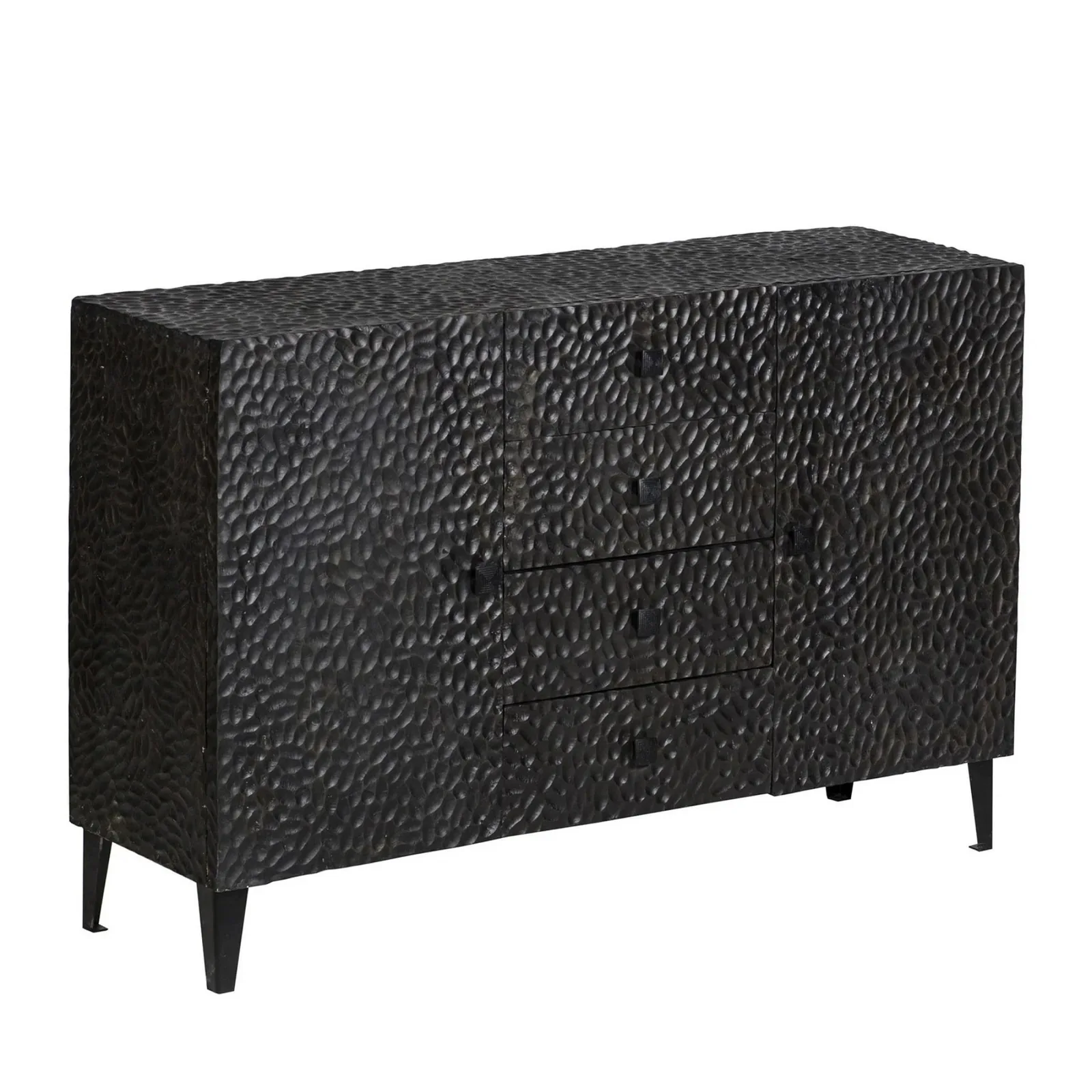
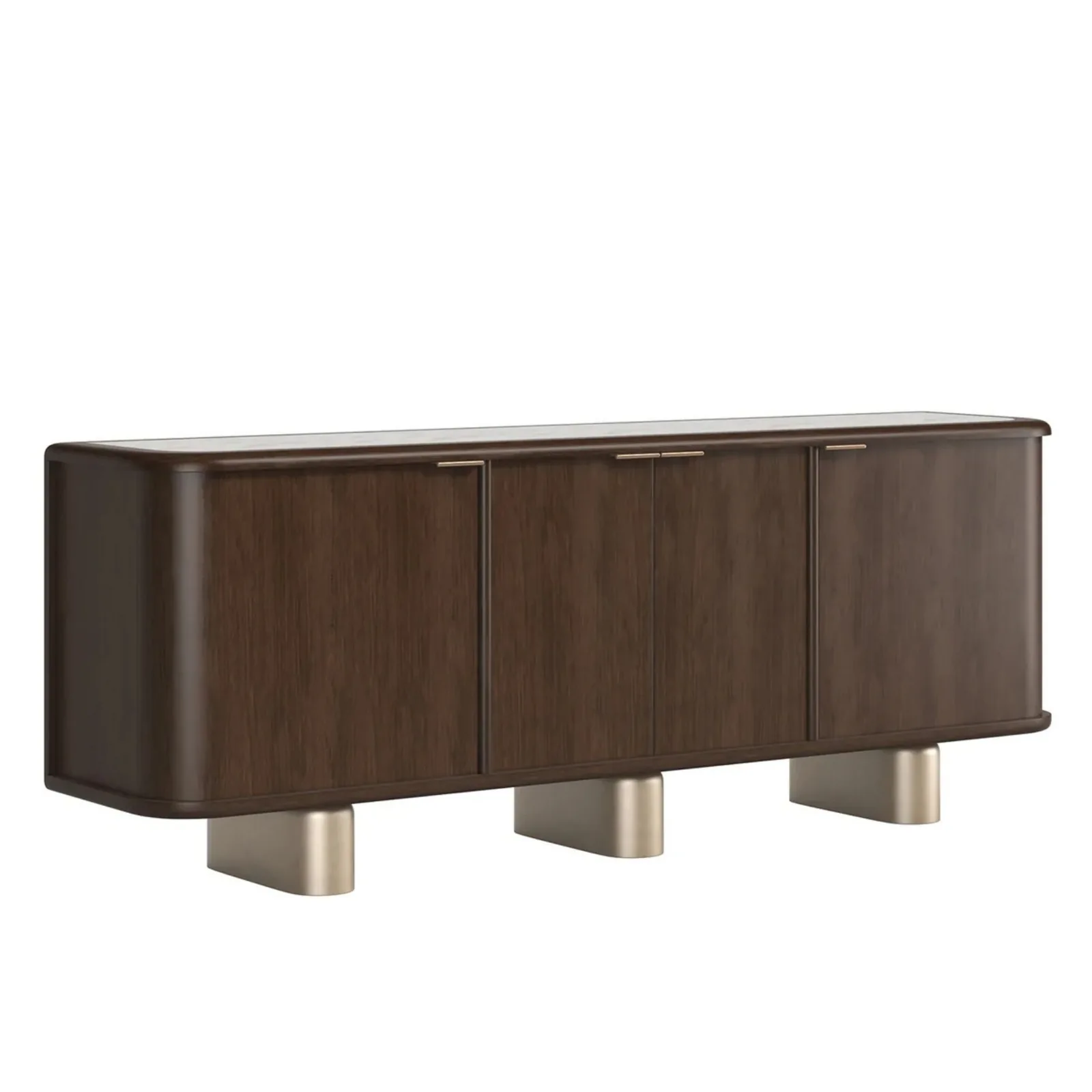
- Sideboards and highboards for dining and living ranges.
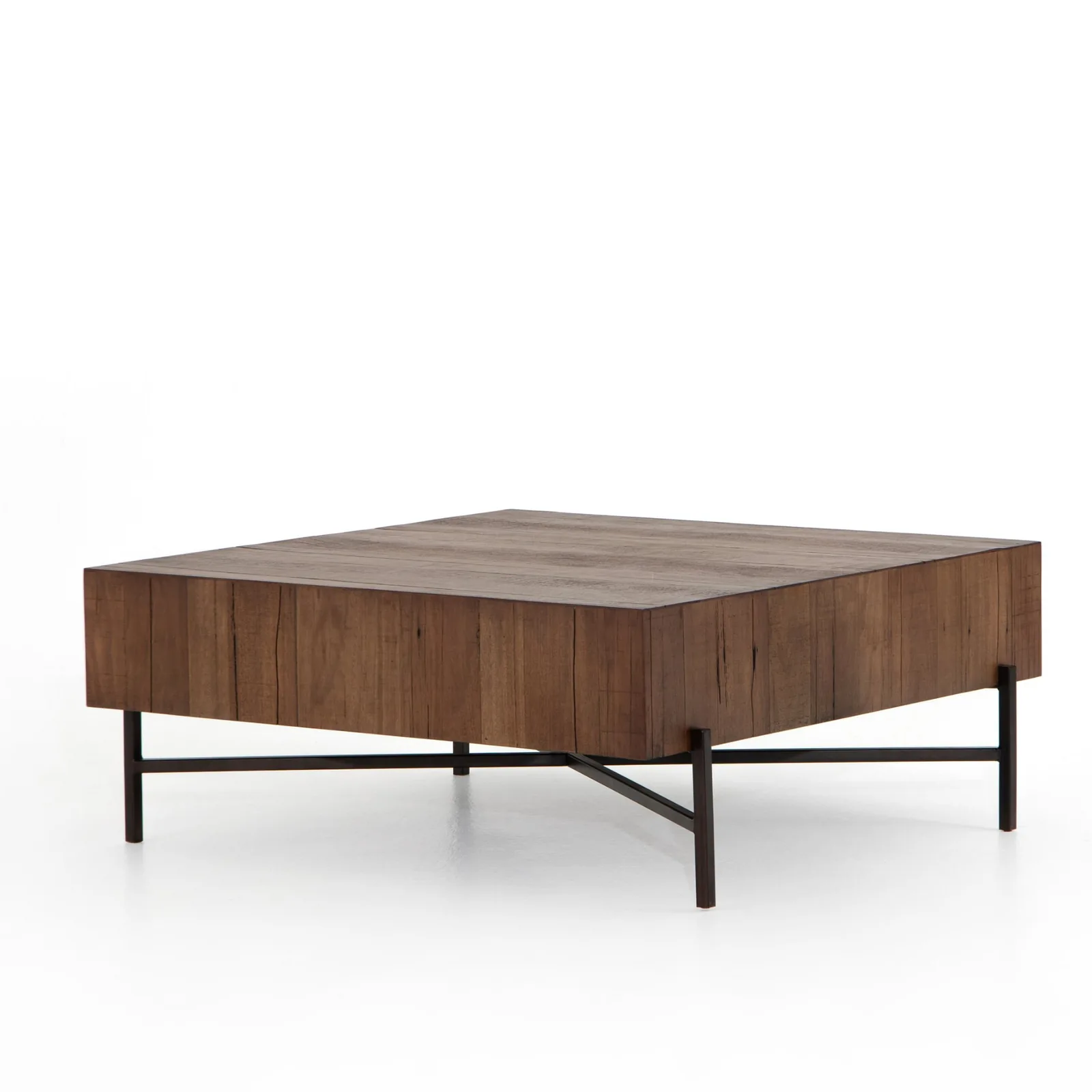
- Coffee tables and side tables.
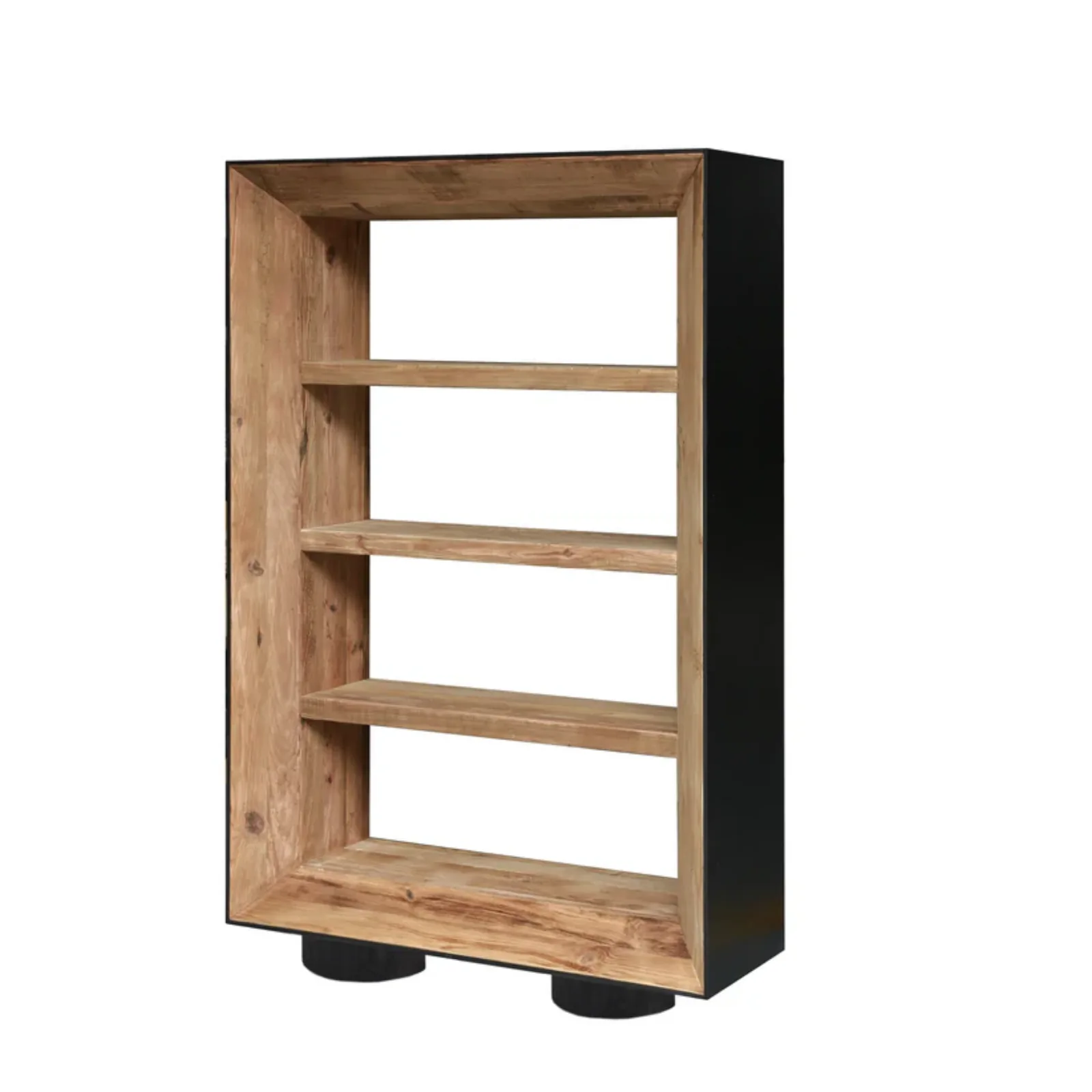
- TV units, cabinets and bookshelves.
Acacia or mango wood?
Acacia is the harder and heavier of the two and is often chosen for tops and tables; mango wood is lighter, more economical and takes painted and light finishes more readily. Many importers combine both in one range. Our comparison guide sets out the differences for buyers.
Preparation, finishing and export
Acacia timber is sorted, treated and seasoned before manufacturing, and moisture is checked before packing. Because of its weight, carton specification and container planning for acacia dining tables are agreed early; see export packaging and shipping. Species and origin information for timber due diligence in the United States, the United Kingdom and the European Union is discussed per order.